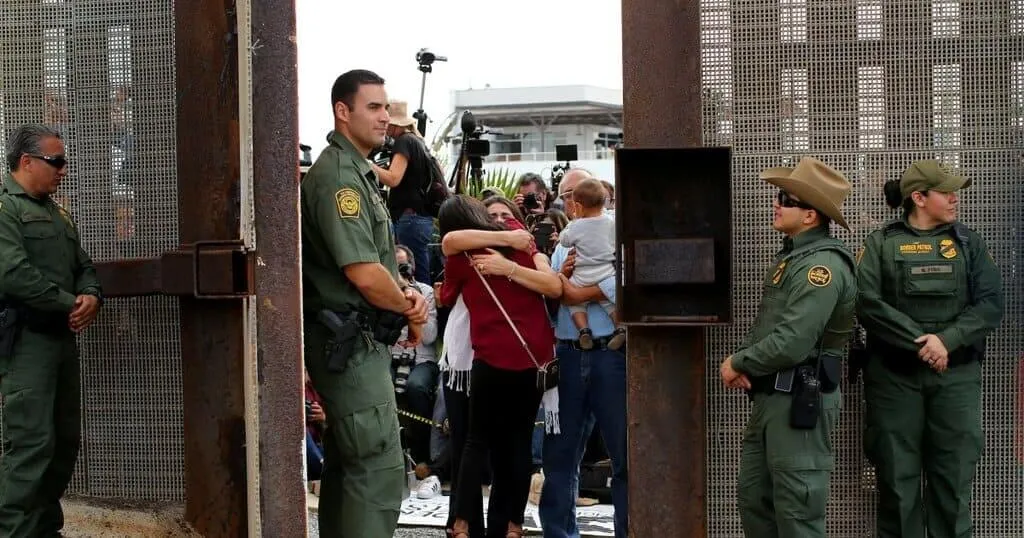
When we talk about refugees, we usually think of people who fled their home country as a result of persecution, economic problems or natural disasters. Mexico accepts everyone, but most of all, of course, those who would like to get to the United States, but could not. Essentially a buffer zone between the United States and the rest of the world, Mexico accepts migrants as they are, without denying their problems and their desire for a better life. It does not encourage migration to the United States through its territory, but it is also unable to contain the huge number of migrants. As a result, some of the migrants end up in Mexico, and something needs to be done with them.
There are also those who deliberately seek refuge in Mexico without targeting the United States. There are many Cubans and other "victims of regimes" in Mexico. In many cases, it is quite simple for them to obtain residency status in the country through an asylum request. Others seek asylum to avoid being deported to resolve their migration problems. We know of cases where fear of traveling during the coronavirus pandemic was also a justification for obtaining humanitarian status in Mexico.
Although we started with refugees, the residency status they can obtain in Mexico is called “humanitarian reasons.” This expands the circle of its potential recipients. Here we want to answer key questions about humanitarian status in Mexico and about obtaining a residence permit in Mexico for refugees, and not only for them.
Don't let the word «refugees» scare you. The acquisition of any residence permit has the same outcome — you have the opportunity to legally live within the state and then become its citizen.
Who does Mexico consider refugees?For you to receive refugee status in Mexico, the threat must be located in your country of citizenship:
- you have been persecuted because of your gender, race, religion, national origin, political opinions, membership of a social group,
- your life, safety or freedom is threatened by violence, foreign aggression, internal conflicts, massive violations of human rights or other circumstances that «seriously disturb public order»,
- you are not able to obtain protection in your own country, including due to the inaction of the authorities (for example, the police do not respond to regular domestic violence or racketeering).
There are many reasons for applying for refugee status in Mexico. The main thing is that they are directly related to you and your homeland.
Who else has the right to prepare humanitarian status in Mexico?Other reasons for obtaining the status of «visitor for humanitarian reasons» enough too. The most obvious:
- serious illness or threat that prevents you from leaving Mexico,
- the need to care for a sick relative in Mexico, visit a prisoner, etc.,
- minor without parents,
- absence or loss of citizenship.
The decision to grant humanitarian status is always made by the Refugee Assistance Commission (Comar), and not by the court. The Commission does not always take a formal approach to considering a case. Any arguments and statements can be accepted and considered.
Can I get refugee status while outside of Mexico?Legally permitted by contacting the Mexican Consular Section. But unless you are Julian Assange, you cannot qualify as a refugee until you leave your country and come to Mexico. Only then will you have the right to seek protection from Comar.
Is it possible to request asylum immediately upon arrival?Yes, you can, but only right away. If you are at the airport or border, tell the INM agent directly within the first 4 hours that you want to request asylum. If you answered “tourism” to the migration officer’s question about the purpose of your visit, and after being denied entry you try to ask for protection, they will try to push you back onto the plane as quickly as possible. Formally, at this moment you are not yet in Mexico. It is possible to involve a lawyer and even the Human Rights Commission, but they still won’t let you into the city quickly, since you do not have migration status. First, your application will be accepted, then a certificate will be issued, and you will have the opportunity to request temporary visitor status for humanitarian reasons from the migration service. Until you acquire migration status, you will be in a migration station, which you can call a prison. You also have the right to request a CURP (Unique Population Registration Code), which in Mexico guarantees access to work, education and social services (but in fact there are few of them).
When and how can you request asylum and humanitarian status?You must contact Comar within 30 business days of entering Mexico. If you apply later, you must have a serious reason why you didn’t do it on time. Or new circumstances must appear that forced you to apply only now. If your state does not have a Comar office (and only 7 out of 32 states have them), you should contact the office of the National Institute of Migration. INM will accept the application, prepare the forms and forward it to Comar. We add that even after the end of the 30-day period from the date of entry, there is a possibility that Comar will accept and consider the request. A good lawyer will achieve this.
After submitting your application, you will be granted temporary visitor status for humanitarian reasons, and after reviewing your application and granting refugee status — You will be issued a Mexican permanent resident card.

What are the benefits of refugee and humanitarian status in Mexico?The answer is simple: this is one of the ways to obtain resident status in Mexico, and it is far from complicated or troublesome, provided there is a reason. The refugee receivespermanent (indefinite) resident status with work permit.
Is it possible to leave Mexico with permanent residence for humanitarian reasons?Yes, you can. But you should understand that until you obtain Mexican citizenship, you will use a passport from your country to travel. If you travel to a country where you were persecuted, you will lose protection and Mexico will suspend your refugee status. If you want to meet relatives, meet them in a third country, but not in your home country. However, this issue can be resolved in other ways. You also shouldn't apply for refugee status in another country if you don't want to lose it in Mexico.
If I receive refugee status, will my family be able to come to me?Yes, he can. The family can receive the same status if you include them in the petition, even if they are not located in Mexico at the time. They will then be able to acquire permanent residence in Mexico, but according to a different procedure.
How long does it take to obtain permanent residence in Mexico for humanitarian reasons?From two months to two years, depending on the workload of the Refugee Assistance Commission. More often than six months. Up to two years were considered taking into account the fact that Comar's offices were closed during the coronavirus epidemic. By law, 55 working days are given for consideration, which can be extended by another 45 days. Until a decision is made (before status is granted), you are prohibited from leaving the region in which you submitted your application and must report regularly to the Comar or INM office. However, you will immediately be given temporary visitor status for humanitarian reasons, and you will already have the opportunity to find a job and begin to get used to life in Mexico. Children are allowed to be sent to school, and they can use healthcare without paying.
After receiving Comar's decision, you should go to the office of the National Institute of Migration and obtain a permanent resident card. After this, you can choose any state of Mexico to live in and move freely throughout the territory of the state. You have the right to enjoy most of the benefits that Mexico provides to its citizens.
What evidence of persecution is required?Any that you managed to collect. First, you should state the main facts in the petition. Then you will be invited to an interview, where you must confirm these facts, preferably with documents. There may be several interviews. If you are being persecuted for political reasons, Comar will refer the case to experts from the Mexican Foreign Ministry, however, political persecution can be more difficult to prove than persecution at the everyday level. As we said above, the decision to grant refugee status is made not by the court, but by officials, and there is a human factor at work here. Although officials are not fools, they are not experts on relevant states and events. Comar emphasizes that a refugee is not required to prove what happened in his country. Often a compelling narrative of persecution makes all the difference. In most cases, you will not need to hire a lawyer, and a translator will be found for you if necessary. But if you are unsure of the strength of your case for persecution, hire a lawyer.
What happens if I get rejected?You will be given an order to leave Mexico within 15 to 30 days. Most likely, you will also not be able to enter Mexico in the coming years. When migrants from the CIS were detained at the US border in 2021 and placed at a migration station, many were asked to apply for asylum in Mexico before being deported. It was kind of a ploy. The status of deportees was not always justified. The migration service could not or did not want to look for a carrier who would take the migrant home (but not to another country), especially since migrants often stated that they were persecuted in this country. For this reason, the migration service transferred the care of detainees to Comar. Some were given refugee status, others were ordered to leave Mexico within 20 days. In all circumstances, once migrants applied for refugee status and received temporary visitor status, they were able to legally remain in Mexico for a period of time and often used this option to try again to cross the border into the United States.
Can I, as a refugee, obtain documentation under a new name?We only know which is to the right. For which cases of persecution there is such a chance, we do not know. Obviously, there must be a very good reason for changing the name.
How to apply for refugee status in Mexico, we described in thispublications.