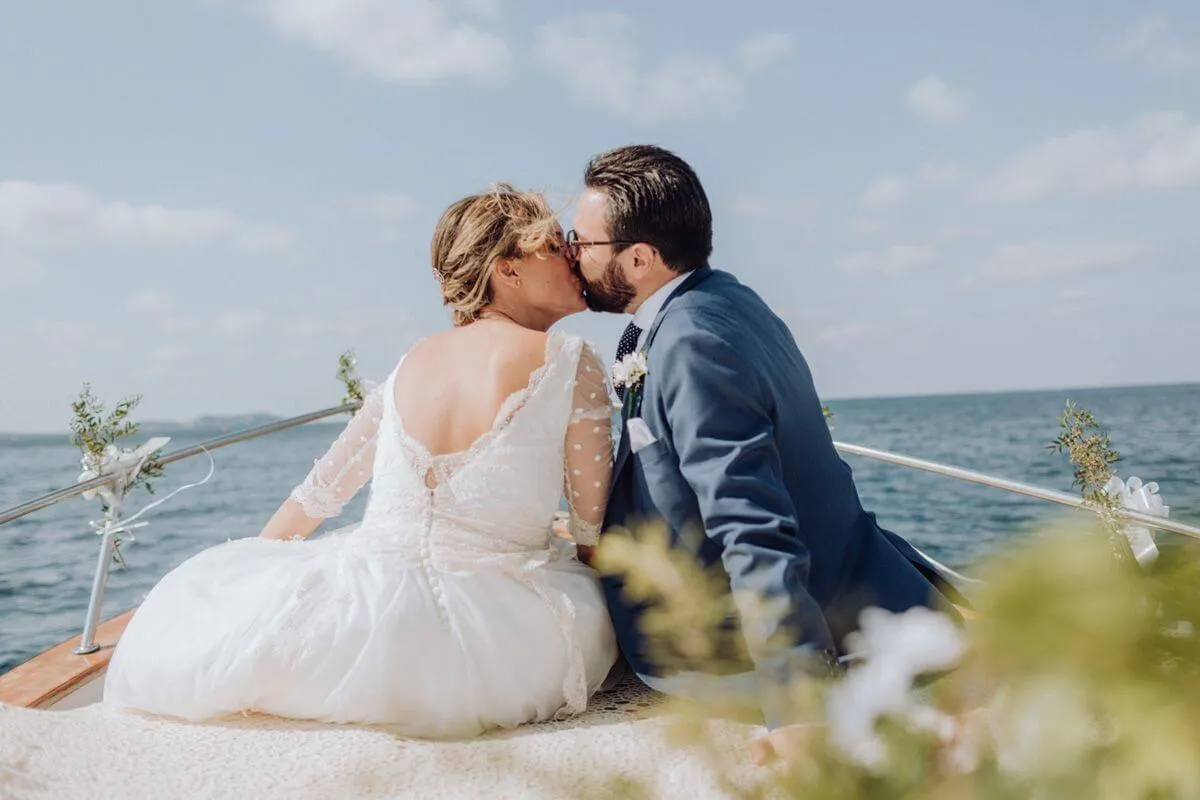
Many of our applicants come to Mexico to get married and then use the received marriage certificate in the United States. Some are marrying an American and planning to obtain a wife visa to enter the United States, others are going to seek asylum in the United States at the border in Tijuana, but as a family. American couples also come to celebrate their wedding in Mexico because it is easier, more romantic and cheaper.
In many countries of the world, in order for a citizen to be considered married, a record of his marriage must be entered in the country's civil registry. At least this is the case in Ukraine, Russia and Mexico. There is no single national marriage registry in the United States. US states issue marriage licenses but do not keep records of marriages performed in other states or other countries. If a marriage was legally performed in one state or another country, the marriage is generally recognized in the United States. Responsibility for confirming your marital status in the case of a marriage contracted in another country rests entirely with the spouse.
The following policies apply regarding same-sex marriage. U.S. Citizenship and Immigration Services (USCIS) determines the validity of same-sex marriages based on the venue rule. The legal validity of a same-sex marriage is determined solely by the law of the jurisdiction where the marriage took place. The laws and policies of the state of residence regarding same-sex marriage do not affect whether USCIS recognizes the marriage as valid. Mexico fully recognizes same-sex marriages, and the United States fully recognizes same-sex marriages performed in Mexico.
Confirmation of a marriage in another country for the United States is a marriage certificate obtained in that country. Typically, Mexican registry offices issue only one copy of a marriage certificate, but if newlyweds are from different countries, we suggest issuing two originals for each spouse.
In order for a marriage license obtained in Mexico to be valid abroad, including in the United States, it must be certified by an apostille stamp. In some cases, for example, for use in Canada, a marriage certificate must undergo consular legalization. We issue the certificate for apostille immediately after registering the marriage and send the already certified document to the newlyweds by courier service in Mexico or to their country if they do not want to wait for the apostille to be completed. An apostilled marriage certificate is the only document that will confirm in the United States that you are considered married.
Marriage to a US Citizen for Immigration Purposes
Generally, the foreign spouse of a US citizen applies for a CR1 (marriage of less than 2 years) or IR1 (marriage of more than 2 years) visa. A U.S. citizen must file a petition for family reunification (Form I-130) with USCIS, including a properly executed marriage certificate. Once USCIS approves the petition, it will be sent to the National Visa Center (NVC) for processing. The applicant must also complete Form DS-261, pay the fees, and complete all required paperwork, including the Affidavit of Support, application forms, civil documentation, etc. Once the National Visa Center receives all documentation, the service will forward the file to the U.S. Consulate for an immigrant visa interview. Typically, processing documentation for purchasing a CR1/IR1 visa takes from 7 months to 1.5 years, followed by the waiting period before the interview at the consulate.
The foreign spouse of an American is also eligible to purchase a K3 nonimmigrant visa. It is usually allowed to be obtained faster, up to 1 year, since it is issued pending approval of the I-130 petition. However, a K-3 visa will only be issued if a CR1/IR1 immigrant visa is not available to the recipient.
Important question: Can the spouse of a US citizen prepare a CR1/IR1 visa in Mexico? NVC typically sends visa documentation to the country of citizenship of the foreign spouse of a U.S. citizen. You should try very hard even at the stage of consideration of the petition to ensure that the visa documentation is transferred to the US consular department in the third country. Usually this is possible only if it is impossible to obtain a visa in the country of citizenship or in the country in which the consular department serves citizens of that state (if with Russia — in Poland). It should be taken into account that when applying for a CR1/IR1 visa, you must also provide a certificate of no criminal record from the state of citizenship or state of residence where the applicant has continuously lived or has been living since the age of 16 for more than 6 months at the time of applying for the visa. Only citizens and residents of the country are allowed to obtain such a certificate in Mexico.
But the K3 visa is issued only in the country in which the marriage took place. Such visas are issued by the consular section of the US Embassy in Mexico City; however, lawyers do not recommend taking the K3 visa route. This is because the K3 visa is only for those whose I-130 is still being processed and not approved, and there is always a high risk that the I-130 will be processed before the visa is purchased. Statistics also show that the United States issues less than a hundred K3 visas per year.
In these processes, both the US citizen and his foreign spouse will need the original marriage certificate when filing petitions and when submitting to the consulate for visa processing. No extracts from civil registers are needed.
You should have your certificates translated into English and have the translation certified by an official (sworn, court) translator in the country where they will be used. In the USA, this is the so-called certified translation with a Certificate of Translation Accuracy — Certificate of Translation. There is no need to notarize the translation. There is also no need to make a translation for the USA in Mexico in advance.
Marriage before requesting asylum in the USA
When you travel to the United States to seek asylum in this country, you want to be considered family and to have one case. Therefore, you need a marriage certificate issued in any country, including Mexico.
Usually in Mexico a marriage for these purposes is registered shortly before crossing the border, literally a couple of days. It doesn't matter that the marriage took place yesterday — this does not make the marriage inferior or suspect. One copy of a marriage certificate certified with an apostille stamp is enough for a family. You need to understand that apostille — a bureaucratic procedure that takes time. In addition, an apostille on a certificate in Mexico can only be affixed in the state where it was issued, and the registry offices are not involved in apostille. You cannot sign in Cancun and put an apostille in Tijuana, even remotely. For this reason, wait until the certificate with an apostille is returned to you or arrange courier delivery.
The marriage certificate must be translated into English to be submitted to US Customs and Border Protection officers. In Mexico, this is allowed to be done by an official translator, who will certify his translation and attach a copy of his license. Under such circumstances, the translation can be done by any Mexican official translator who speaks English; his federal subordination is not important.
Already in the United States, a translation made by an official Mexican translator will become invalid. If the certificate needs to be filed with USCIS or the courts, a certified translation must be made. Notarization of the translation is not required.
Marriage of US citizens in Mexico
As we said, in order for spouses married in Mexico to be considered married in the United States, they should only have a marriage certificate. The certificate must be certified with an apostille stamp. Then, if necessary, you need to make a certified translation into English from an American translator. If the certificate will be used in court cases, the certified translation must also be notarized.
Some Americans also make notarized copies of the certificate and present them instead of the original. Here you need to understand that public notaries in all US states do not have the authority to certify that a copy of a document corresponds to the original, that is, to make certified copies.
If you have lost your Mexican marriage license, you can only obtain a new one in Mexico. To do this, contact any registry office (Registro civil) in the state where the marriage took place. There you will be given a certified copy, which is valid throughout Mexico as the original. Such a copy costs from 60 to 200 MXN, depending on the state. This copy must then be apostilled and will be valid outside of Mexico.